Lead magnets help turn website visitors into leads by offering quick, valuable resources in exchange for contact details. When aligned with user intent and promoted effectively, they improve conversions and build trust. Choosing the right format, solving a specific problem, and avoiding common mistakes ensures consistent and high-quality lead generation.
Introduction
If you’ve ever downloaded a free guide or used an online quiz, you’ve already interacted with a lead magnet. Lead magnets give something valuable in exchange for something in return.
This builds trust and helps to engage with readers, potentially resulting in sales. In this blog, you’ll learn how lead magnets work, the different types you can use, and the steps to build your own.
Bonus: Conversions via lead magnets are a positive signal to Google, which means your rankings also improve.
[text_lm]
What Is a Lead Magnet?
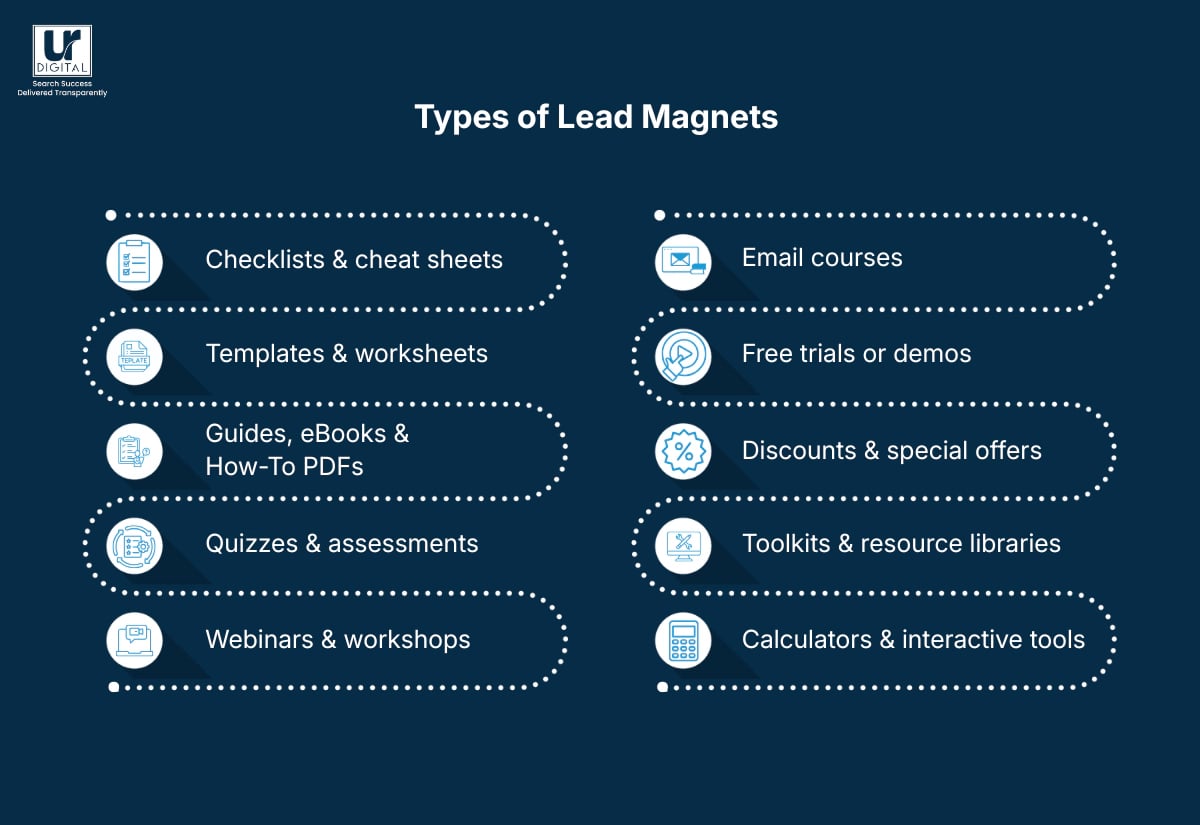
A lead magnet is a free resource you offer in exchange for someone’s contact details. It gives the person something useful — like a checklist, guide, template, quiz, or discount — and helps your business identify people who are interested in what you do.
The goal is to provide quick, practical value and start a relationship that can lead to future sales.
Why Lead Magnets Matter?
Lead magnets matter because they turn anonymous website visitors into identifiable leads. Instead of hoping someone comes back, you get permission to stay in touch through email or other channels.
A good lead magnet helps to:
- Build a list of high-intent, qualified prospects.
- Provide insights into what your audience cares about
- Improve conversion rates compared to generic “subscribe” boxes
- Make lead generation more consistent and predictable
Types of Lead Magnets
How to Choose the Right Lead Magnet for Your Business
1. Start with a specific problem your audience wants solved
Don’t guess — look at your top-performing blog posts, FAQs, customer questions, or support tickets. If people repeatedly ask, “How do I start?” or “What should I avoid?”, that’s your signal. Your lead magnet should answer that question directly, in a format that helps them take action right away.
2. Match the lead magnet to your main offer
The content shouldn’t be random or interesting-but-unrelated. If you sell SEO services, a “Keyword Planner Template” makes sense. If you sell fitness coaching, a “7-Day Workout Planner” lines up with your paid program. The lead magnet should naturally make the next step (your offer) feel logical and relevant.
3. Consider where your audience is on the buying journey
Early-stage visitors who are just learning might prefer simple checklists or educational mini-guides. People who are closer to buying often respond better to templates, calculators, demos, or quizzes that help them make a decision. Match the format to their level of awareness.
[image_lm]
4. Choose a format you can produce quickly and well
A great lead magnet isn’t about length — it’s about usefulness. If you can create a strong one-page checklist in a day, that’s more effective than spending weeks on a 30-page eBook that no one finishes. Choose the format you can deliver at a high quality without delays.
5. Make sure the lead magnet delivers a quick win
The user should get value in under 10 minutes. For example, a checklist they can use immediately, a template they can download and fill in, or a quiz result that gives them clarity. Quick wins build trust faster than long guides or complex PDFs.
6. Test different formats if you serve multiple audience segments
If you have beginner and advanced users, or different service lines, consider offering different magnets. For example: a beginner-friendly “SEO Basics Checklist” and a more advanced “Technical SEO Audit Template.” Tracking sign-ups will show you which segment is more engaged and what content they value.
[text_lm]
How to Promote Your Lead Magnet
Creating a great lead magnet is only half the job — the real results come from putting it where your audience will actually see it. Here are the most effective ways to promote it:
Add it to high-traffic website pages
Place your lead magnet on relevant blog posts, your homepage, and service pages where the topic aligns naturally.
Use clear CTAs throughout your content
Add banners, in-line buttons, and end-of-post prompts that explain exactly what the user will get.
Create a dedicated landing page
A simple page focused only on the lead magnet can improve conversions and make sharing easier.
Share it on social media regularly
Treat it like a core piece of content — post about it weekly with different angles or examples.
Mention it in your email signature
Your email signature is a subtle but consistent way to promote your lead magnet to warm audiences.
Use pop-ups or slide-ins (sparingly)
Timed or exit-intent pop-ups can boost sign-ups without disrupting the user experience.
Want to read more on Popups and how to effectively use them to boost your brand: Impact of Popups on SEO
Promote it in podcasts, webinars, and workshops
Any live or recorded content is an opportunity to point people toward your resource.
Run a small paid ad campaign
For high-value lead magnets, low-budget Facebook, Instagram, or LinkedIn ads can work well.
Add internal links from related content
Link to your lead magnet from other blogs or resources to capture engaged readers.
Offer it in your email newsletters
Subscribers who didn’t download it the first time may convert when reminded later.
[image_lm]
Common Mistakes to Avoid
1. Making it too broad or vague
Lead magnets work best when they solve one specific problem, not a dozen general ones.
2. Creating something too long or hard to use
A 40-page PDF may look impressive, but most people won’t read it. Short, practical resources convert better.
3. Choosing a topic unrelated to your main offer
If the lead magnet doesn’t naturally lead to your paid service or product, the leads won’t be a good fit.
4. Hiding value behind a complicated process
If someone has to jump through multiple steps just to access the resource, they’ll drop off quickly.
5. Not promoting it properly
A great lead magnet won’t work if it’s buried on your website. It needs clear CTAs, placement on key pages, and ongoing promotion.
6. Skipping the follow-up sequence
Collecting emails is only the first step. Without a few simple nurture emails, your lead magnet won’t deliver its full value.
7. Trying to create too many lead magnets at once
Focus on one strong, high-converting resource instead of spreading your efforts across multiple average ones.
[image_lm]
Conclusion
Now that you understand how lead magnets work, the next step is creating lead magnets for your business. To do so, you can choose one problem your audience wants solved and decide on a lead magnet format. You can start small- — with a checklist or template is often enough to begin generating leads.
If you need help planning or creating a high-performing lead magnet, UR Digital can assist you. Our experienced team can help create high quality lead magnets for your business, based on in-depth research. Get in touch and we’ll assist you in taking the next step.
FAQs
What’s the easiest type of lead magnet to create?
The simplest lead magnets are checklists, cheat sheets, or one-page templates. They take less than an hour to make and still provide strong value. Many businesses start with these before moving into quizzes or email courses.
How do I pick the right lead magnet topic?
Choose a problem your audience consistently asks about. Check your support emails, top-performing blogs, or social comments — that’s usually where the clearest pain points appear. Your lead magnet should directly solve one of those problems.
Do lead magnets work for small businesses?
Yes. In fact, small businesses often see faster results because their audience is highly specific. A simple resource — like a pricing guide, audit checklist, or starter template — can quickly build a list of qualified leads.
Should a lead magnet be free?
Yes. If you’re asking for an email address, you need to give something valuable at no cost. If you charge for it, it becomes a low-ticket product rather than a lead magnet.
How long should a lead magnet be?
Shorter is usually better. A lead magnet should deliver a quick win in under 10 minutes — not feel like a full course or long eBook. People appreciate clarity and speed.
Where should I place my lead magnet on my website?
Place it on high-traffic, high-intent pages: relevant blog posts, service pages, your homepage, and anywhere your audience is researching a topic. Pop-ups and exit-intent boxes can also work if used sparingly.
Pro-tip: I have been in SEO industry for over 20 years and in my two decades, I have learnt two very important things:
- Right slide in popups for lead magnets do really well when it comes to conversion.
- Focus on more lead magnets in the first fold because not all users make it to the end.
What should happen after someone downloads my lead magnet?
They should receive a thank-you immediately, followed by a short nurture sequence (2–4 emails). These emails reinforce the topic, offer extra tips, and guide them toward your main service or product.
How many lead magnets should I create?
Start with one strong, effective lead magnet. Only add more when you have clear segments or multiple service lines that require different entry points. Quality beats quantity.
Do lead magnets still work with all the changes in search and social algorithms?
Yes. Lead magnets work because they rely on value, not algorithms. As long as your offer solves a real problem, people will exchange their contact details for it. This makes lead magnets one of the most stable marketing assets today.
Can lead magnets help with SEO?
Yes. While the lead magnet itself doesn’t improve rankings, the conversions really help with SEO as they are monitored by Google.
What’s the best format for a high-intent audience?
Templates, calculators, and short audits work best for people close to making a decision. These formats help them evaluate their options and move closer to your paid service.
How do I know if my lead magnet is converting well?
A good lead magnet often converts at 20–40%. If you’re below that range, review your offer, landing page messaging, and CTA placement. Small tweaks can create big improvements.