Content freshness influences SEO when accuracy and recency matter to search intent. Search engines evaluate meaningful updates—not just timestamps—based on content changes, structure, and engagement signals. By updating selectively and maintaining accuracy, you can improve rankings without over-editing content or disrupting pages that already perform well.
Introduction
Search engines aim to surface results that are both relevant and current. Content freshness refers to the degree to which a page reflects up-to-date information, context, and accuracy relative to the query it serves. Freshness does not universally apply to all queries but operates selectively based on intent, topic volatility, and user expectations.
[image_lm]
How Search Engines Define Content Freshness
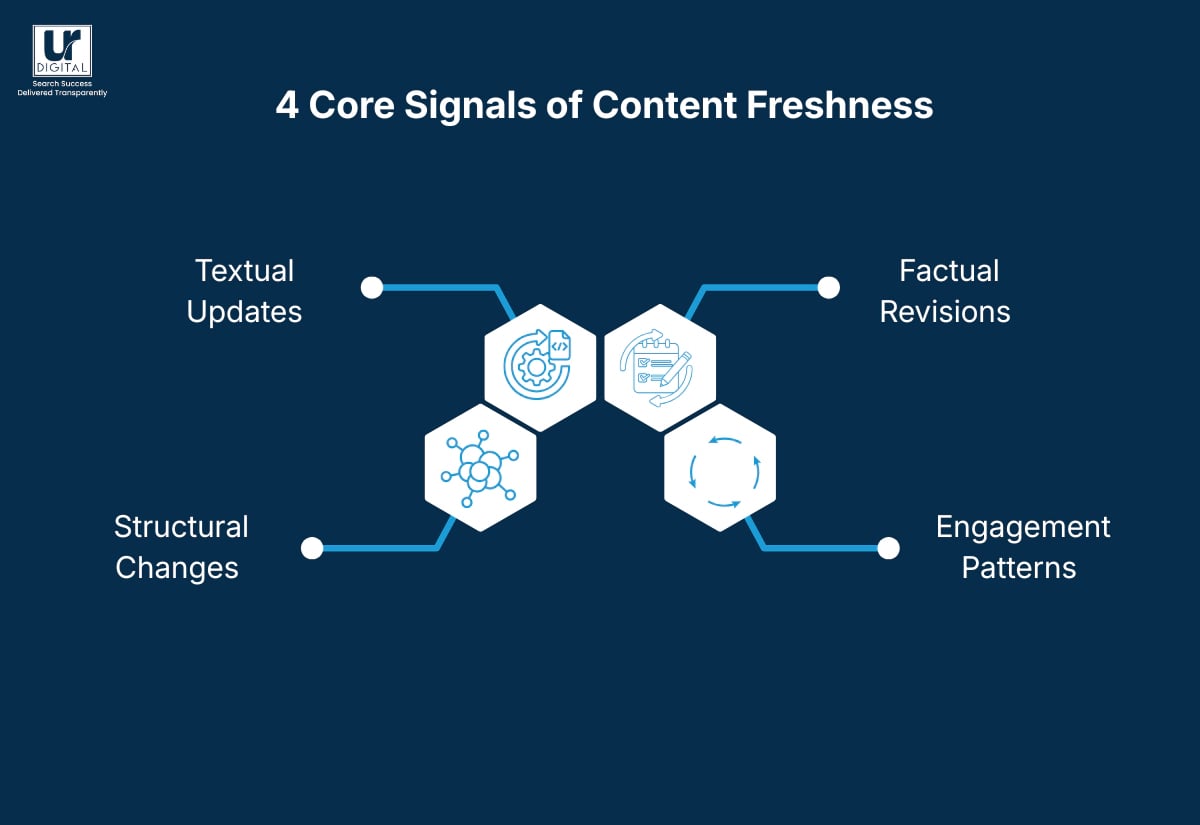
Freshness is not limited to publication date changes. Search engines evaluate multiple signals to determine whether content remains current, accurate, and useful. These include textual updates, factual revisions, structural modifications, and engagement patterns over time.
“Different queries have different freshness needs. Some topics require the most up-to-date information, while others are best served by content that remains stable over time.”
This principle underpins how freshness is applied selectively rather than universally.
When Freshness Influences Rankings
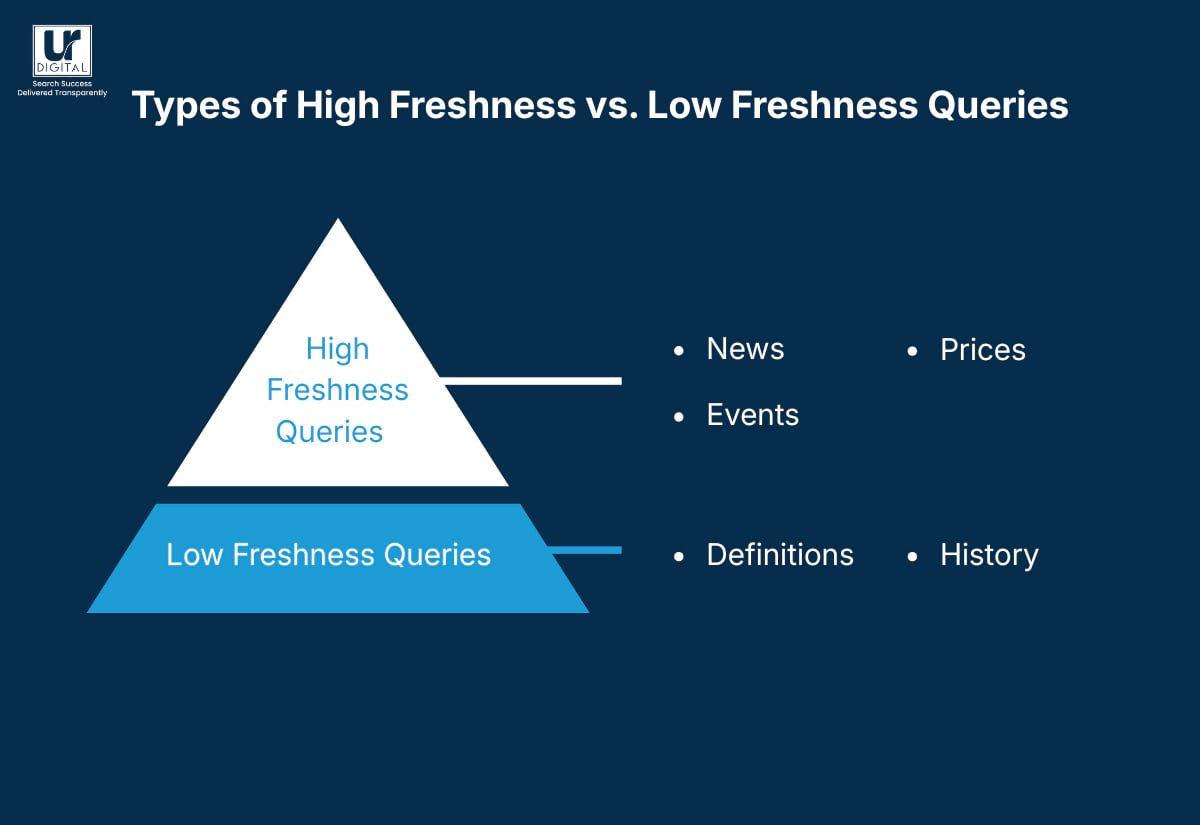
Freshness is most influential for queries involving time sensitivity, such as news, recurring events, regulatory changes, product updates, and pricing information. For these queries, outdated content may be demoted even if it remains authoritative.
In contrast, queries seeking foundational knowledge, definitions, or historical context are less affected by update frequency. Search engines prioritise accuracy and completeness over recency in these cases.
Content Types and Freshness Expectations
Different content categories carry distinct freshness requirements. Organisations must align update strategies with the underlying intent of each content type.
Informational content covering laws, statistics, or best practices requires periodic verification. Transactional pages involving products, services, or pricing require continuous accuracy. Evergreen guides benefit from structured reviews rather than frequent superficial edits.
Update Signals Search Engines Monitor
Search engines observe both direct and indirect indicators of content updates. These signals help determine whether a page has materially improved.
Key indicators include:
- Meaningful changes to main content
- Updated data, references, or sources
- Improved internal linking and structure
- User engagement changes over time
These signals are evaluated collectively, not in isolation, and must reflect substantive improvements rather than cosmetic changes.
[image_lm]
Technical and Structural Considerations
Technical implementation affects how updates are interpreted. Pages should use accurate timestamps, consistent URL structures, and proper indexation signals. Updating a page without crawl accessibility or clear versioning may prevent search engines from recognising improvements.
Schema markup such as dateModified, when used accurately, can assist search engines in identifying legitimate updates. However, misleading timestamps without content changes may degrade trust signals.
Governance, Review Cycles, and Editorial Control
Effective freshness management requires formal review processes. Organisations should define review intervals based on topic volatility and regulatory exposure. Content ownership, change logs, and approval workflows reduce the risk of outdated or incorrect information remaining published.
Editorial governance also supports E-E-A-T by demonstrating accountability, expertise, and consistency across updates.
Measuring the Impact of Content Freshness
The impact of updates should be assessed using pre- and post-change metrics. These include ranking stability, organic traffic trends, crawl frequency, and engagement signals. Isolated updates should be tracked individually to determine which changes influence performance.
Measurement should distinguish between correlation and causation, particularly when multiple SEO initiatives run concurrently.
[text_lm]
Risks and Common Misinterpretations
A common error is equating freshness with frequent updates. Unnecessary changes can introduce inaccuracies, dilute topical focus, or reset performance signals. Another risk is updating dates without improving substance, which may reduce trust.
Freshness should support accuracy and relevance, not serve as a mechanical ranking tactic.
Conclusion
Content freshness isn’t about updating everything—it’s about updating what matters.
Search engines reward content that stays accurate, relevant, and aligned with user expectations. For some pages, that means regular updates. For others, it means preserving stable, well-performing content without unnecessary changes.
The key is to treat freshness as a strategic decision, not a routine task.
By focusing on meaningful updates, aligning with search intent, and tracking performance, you can maintain content that continues to rank—without disrupting what already works.
[image_lm]
FAQs
Does content freshness affect all keywords?
No. Freshness affects rankings selectively, depending on query intent and topic volatility. Time-sensitive queries prioritise recent information, while evergreen topics prioritise accuracy and completeness. Search engines evaluate freshness in context rather than applying it as a universal ranking factor.
How often should content be updated for SEO?
Update frequency should align with how often information changes. Regulatory, pricing, and news-driven content require more frequent reviews, while evergreen guides benefit from scheduled audits. Updates should be triggered by factual changes rather than arbitrary timelines.
Is changing the publish date enough to improve freshness?
No. Search engines evaluate substantive content changes, not just visible dates. Updating timestamps without meaningful revisions may be ignored or reduce trust. Legitimate freshness requires updated information, improved structure, or enhanced clarity.
How can freshness support E-E-A-T signals?
Regular reviews and accurate updates demonstrate expertise, experience, and accountability. Freshness supports E-E-A-T by showing that content is maintained, verified, and aligned with current knowledge or regulations, especially in high-risk or technical subject areas.
Can content updates negatively impact SEO?
Yes. Poorly executed updates can remove valuable keywords, disrupt internal links, or introduce inaccuracies. Each update should be tested, documented, and monitored to ensure it enhances relevance rather than undermining existing performance.
Disclaimer
The contents of this blog are for informational and educational purposes only. They do not constitute professional SEO, GEO, AEO, ASO, or digital PR advice and should not be relied upon as such. We recommend consulting with an SEO expert before implementing any strategies. UR Digital accepts no responsibility or liability for any outcomes resulting from actions taken in reliance on the information contained in this content. Links to third-party websites are provided for reference purposes only. We do not endorse or guarantee the accuracy, relevance, or completeness of their content.