AI images are not penalised by Google and it has no direct impact on SEO. Their SEO impact depends on quality, authenticity, and optimisation. When used poorly, they can harm users trust and engagement and Google cares about the user. Used carefully alongside real visuals, they can support content without replacing authentic imagery.
Introduction
AI-generated visuals have grown remarkably common in recent years, offering brands cheap and rapid alternatives to traditional photography. But as their use spreads, so does the debate: are AI images actually beneficial for SEO, or could they subtly hinder SEO performance? And where does Google stand on content that isn’t “real” in the traditional sense?
This guide examines the SEO value of AI images from a critical perspective—covering where they help, where they fail, and why smaller brands in particular should be cautious before replacing authentic visuals with synthetic ones.
Trying to decide whether AI images make sense for your website?
[text_lm]
Google’s Stance on AI-Generated and Stock Images
Google has made it clear that it does not directly penalise websites for using AI-generated or stock images. Image origin isn’t an explicit ranking factor.
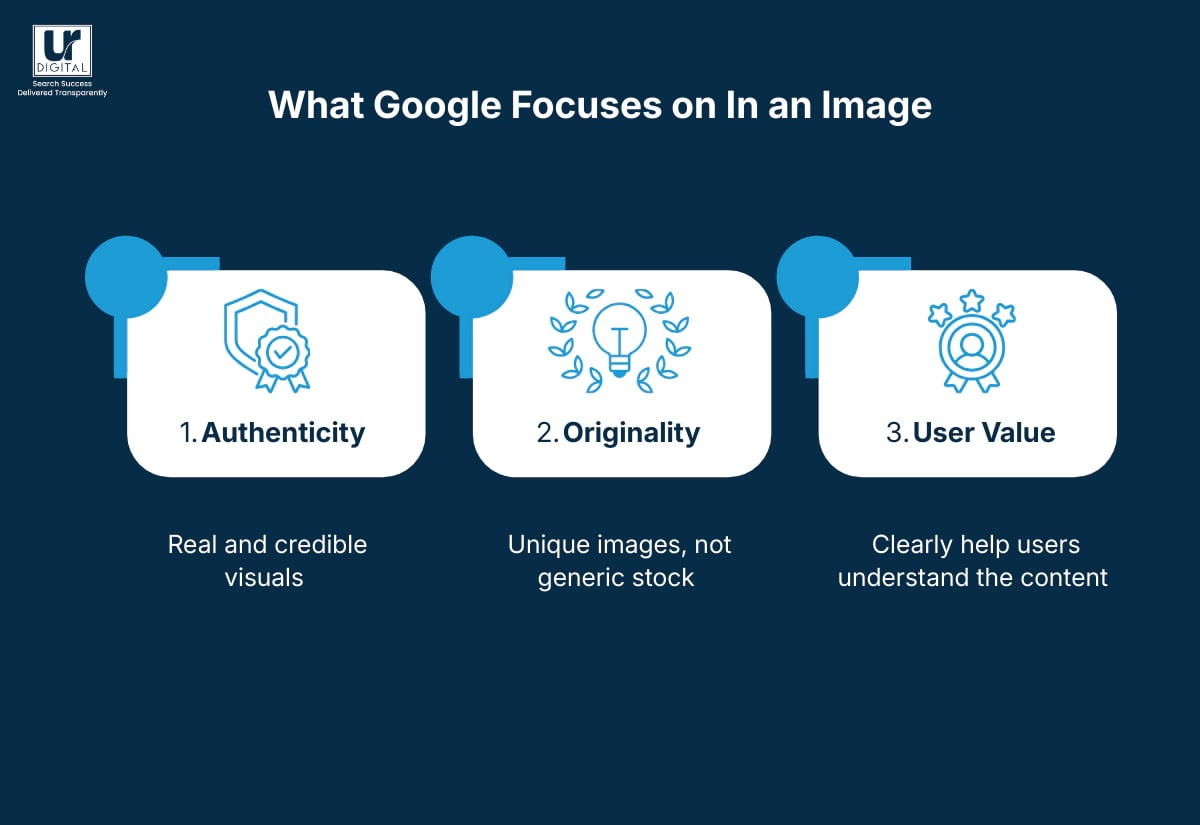
However, Google’s emphasis is firmly on authenticity, originality, and user value—three areas where AI images often fall short if not handled carefully.
Google representatives, including John Mueller and Gary Illyes, have reiterated in the past that while AI imags won’t trigger penalties, it will also not inherently improve your rankings. Using the same uninspired or generic visuals that everyone else creates with similar prompts simply doesn’t set your brand apart.
Websites that perform best are those that use images offering genuine context, user relevance, and unique value—qualities that AI images often struggle to provide consistently.
SEO Benefits of AI-Generated Images
AI-generated visuals can provide certain SEO-related advantages, though these are frequently overstated:
Originality
This is mostly in theory, and not always in practice, but AI-generated images are technically unique.
However, over time, images can start resembling each other due to similarity in prompts and model limitations. The “originality advantage” can be slim unless prompts are carefully crafted.
Customisation at Scale
AI tools allow you to quickly create tailored visuals, but these may still look artificial or inconsistent with your brand if not manually refined.
Budget-Friendly
For small brands and businesses, AI images offer an affordable alternative to photoshoots—but lower cost can also mean lower quality, which may undermine user trust.
Engagement
In certain contexts, bespoke AI visuals can capture attention, thereby improving content engagement. However, unrealistic style choices or odd visual artefacts can just as easily harm engagement metrics.
Strong Metadata and Accessibility
As with any image, thoughtful filenames and alt text help search engines understand context. This benefit isn’t unique to AI images—it simply requires good practice.
[image_lm]
Risks and Downsides of AI Images for SEO
The risks often outweigh the potential gains, especially for smaller brands:
Unrealistic or Inaccurate Visuals
AI frequently introduces subtle distortions or unnatural elements. Users notice these quickly, and trust can drop sharply, damaging engagement and conversions. Trust is a very important ranking factor.
Copyright and Legal Grey Areas
Many AI systems are trained on datasets containing copyrighted material. This places businesses in uncertain legal territory, particularly when images are used commercially.
Weak Brand Consistency
AI images can feel mismatched or off-brand without expert supervision. This inconsistency can dilute identity and weaken the perceived reliability of your site.
Performance Problems from Large File Sizes
AI tools often generate high-resolution images. If you don’t compress them properly, site speed suffers—and site speed is undeniably a UX and SEO factor.
Authenticity Concerns
Web users increasingly prefer real, relatable visuals. Overuse of synthetic imagery can make a site feel generic or untrustworthy.
Watermarks and Quality Issues
Visible AI tool watermarks—or even subtle AI artefacts—create an unprofessional impression, harming user trust far more than they help rankings.
Best SEO Practices If You Must Use AI Images
If you decide to incorporate AI visuals, careful implementation is essential:
- Use AI images to complement—not replace—authentic photography.
- Optimise for performance with modern formats like WebP or AVIF.
- Apply meaningful, keyword-rich filenames and alt text.
- Ensure images reinforce the surrounding written content.
- Review licensing guidelines for your AI tool to avoid legal issues.
- Avoid images with obvious AI artefacts or unrealistic elements.
- Maintain consistent visual style through careful prompting.
- Confirm images are crawlable and not restricted in robots.txt.
These steps won’t turn AI images into SEO assets by themselves—but they can help reduce potential harm.
Want a structured way to decide when AI visuals are worth using?
Our AI-Generated Images for SEO Guide shows how to identify safe use cases, test image intent in SERPs, and implement AI images without hurting performance.
[text_lm]
Why Big Companies Have an Edge with AI Images
Large enterprises usually gain more from AI images for three key reasons:
- Professional Oversight
They employ designers, art directors, and editors who can refine AI visuals into polished, brand-aligned assets. You may have seen this Jen AI commercial. - Strong Brand Authority
Established brands already have trust signals, domain strength, and loyal audiences. Minor missteps with AI imagery are unlikely to damage their SEO performance. See 5 AI Advertising controversies. - Capacity to Scale Quality
They can generate large volumes of AI content without compromising on quality—something smaller businesses often struggle with.
For small to medium-sized brands, poor AI imagery can quickly harm credibility and user perception. Without strong existing authority, the risks of AI—especially fake-looking visuals or inconsistent branding—can significantly impact SEO performance.
[image_lm]
Final Verdict: Good or Bad for SEO?
AI images are not inherently good or bad for SEO, despite the hype. Google doesn’t penalise them, but nor does it reward them. Their impact depends almost entirely on execution.
For many brands—especially smaller ones—the risks of reduced authenticity, legal ambiguity, and poor-quality visuals easily outweigh the potential benefits.
AI images can support SEO only when used thoughtfully, alongside real imagery, strong brand guidelines, and careful optimisation. In most cases, they should be seen as supplementary—not a shortcut to better rankings.
Frequently Asked Questions (FAQs)
Does Google penalise AI-generated images?
No. Google does not penalise AI or stock images. But low-quality or irrelevant visuals can harm engagement, indirectly weakening SEO.
Can AI images improve SEO?
Only in limited circumstances. They may support image search visibility or engagement if carefully designed and optimised—but they do not guarantee better rankings.
Are AI images better than stock photos for SEO?
Not always. While AI images may offer uniqueness, stock photos often provide realism and reliability. Both require proper optimisation.
What are the biggest risks of AI images for small businesses?
Authenticity issues, legal uncertainty, inconsistent branding, and slower site speed—each of which can harm SEO more for lesser-known websites.
How do I optimise AI images for SEO?
Use descriptive filenames and alt text, compress images, ensure contextual relevance, and avoid watermarks or obvious AI artefacts.
[image_lm]
Disclaimer
The contents of this blog are for informational and educational purposes only. They do not constitute professional SEO, GEO, AEO, ASO, or digital PR advice and should not be relied upon as such. We recommend consulting with an SEO expert before implementing any strategies. UR Digital accepts no responsibility or liability for any outcomes resulting from actions taken in reliance on the information contained in this content. Links to third-party websites are provided for reference purposes only. We do not endorse or guarantee the accuracy, relevance, or completeness of their content.