Focusing only on Google limits a brand’s search visibility and creates dependency risk. Microsoft Bing drives significant traffic through defaults and enterprise systems. Optimising for all search engines improves reach, reduces risk, and ensures consistent performance across different algorithms and evolving AI-driven search ecosystems.
Preread
- This article is written by Humans for Humans.
- Audience: Business owners and Marketing Managers
- Too much for one time reading: Click save to bookmark for later reading (bottom right).
Introduction
Search optimisation strategies often allocate disproportionate emphasis to Google. Although Google maintains the largest market share in Australia and globally, Bing still control material portions of search activity. Organisations that rely solely on Google visibility risk losing measurable traffic, qualified leads, and audience segments that use alternative search ecosystems.
This blog outlines the operational, technical, and strategic reasons why Bing or DuckDuckGo or Ecosia or others for English markets and Baidu (Chinese) and Yandex (Russian) requires explicit consideration in any comprehensive search strategy. For the sake of clarity, this article will only cover Microsoft Bing, but the objective is, that there are other search engines than just Google.
[text_lm]
Market Share Distribution and Its Impact on Visibility
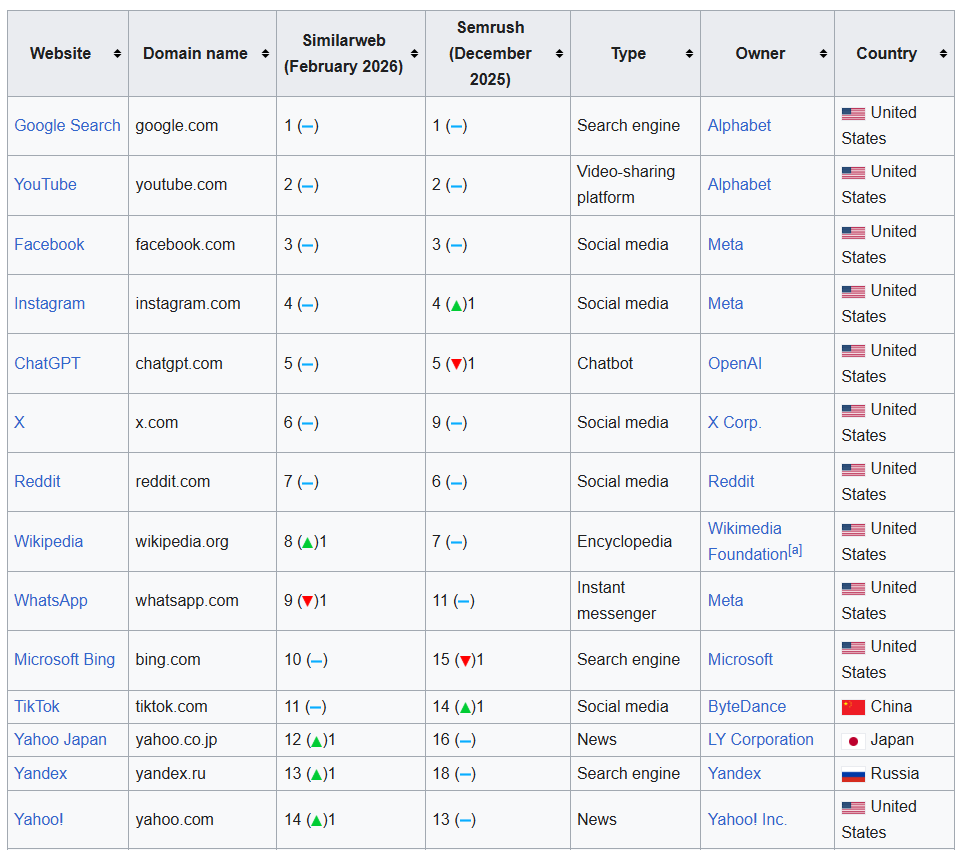
Image Credit: Wikipedia
Although Google leads search, Bing maintains significant usage through Microsoft Windows defaults, Microsoft Edge, and integration with Office 365 enterprise environments. Therefore, optimisation for Bing automatically visibility and traffic performance.
Market share variance across demographics and industries means that some user cohorts rely more heavily on Bing than the general population.
For example, users of corporate-managed Windows devices frequently default to Bing due to administrative configuration policies. Ignoring these platforms can reduce search reach among enterprise, education, government, and technology-constrained users.
If you’re unsure whether your site is visible across all search engines, use our FREE Multi-Search Optimiser Template Pack to audit your presence across Google and Bing.
[image_lm]
Algorithmic Differences That Influence Ranking Outcomes
Technical conformance varies across the engines.
Although Google Search Console provides URL inspection and Core Web Vitals reporting, Bing Webmaster Tools offers additional diagnostics such as SEO Analyzer and precise crawl frequency controls. Also, Bing maintains its own Bing Webmaster Tools platform, separate indexing API, and distinct crawl control configurations.
This divergence means that monitoring only Google Search Console can leave out gaps in your report. Ensuring complete visibility requires instrumenting both platforms, validating sitemaps separately, and reviewing crawl anomaly data through both providers.
If it helps, Bing Webmaster Tools also added AI Performance reporting, more on that here.
To sum up, neglecting Bingcan leave a blind spot on diagnostic indicators that can identify errors that Google may not surface.
Content Structure and Semantic Interpretation Differences
Content interpretability varies because the engines use different natural language processing systems.
Google relies heavily on semantic ranking models such as BERT and MUM, which infer contextual meaning and relationships between entities.
Bing uses its own suite of natural language models with a more literal interpretation of key terms and phrase structures.
This distinction means that tightly structured, high-clarity content often performs consistently across engines, whereas ambiguous content may generate divergent results. Organisations must ensure that content architecture remains explicit, well-defined, and free of interpretive ambiguity to preserve ranking consistency.
Device, Browser, and Platform Defaults That Influence Traffic Sources
Search traffic is also influenced by default settings on devices and software environments. If you are keen to learn more about this, read this excellent article by International Center for Law & Economics.
All Windows systems ship with Bing as the default search engine within Microsoft Edge. Many corporate devices restrict browser installation, further reinforcing Bing usage.
This structural distribution means that traffic from Bing is not optional or discretionary. It is driven by hardware, software, and policy constraints. Organisations that ignore these engines eliminate visibility across entire device ecosystems.
Our FREE Multi-Search Optimiser Template Pack helps you assess traffic concentration, identify gaps, and build a more resilient multi-engine strategy.
[image_lm]
Advertising Ecosystem Considerations
Microsoft Advertising (formerly Bing Ads) serves both Bing search inventory. Its cost-per-click rates are typically lower than those within Google Ads due to reduced bidding competition. Organisations operating in cost-sensitive acquisition models may achieve lower cost per lead across the Microsoft ecosystem.
Indexing Behaviour and Crawl Frequency Variances
Google and Bing maintain independent crawling infrastructures. Their crawl budgets, prioritisation schedules, and content refresh frequencies differ.
Google allocates crawl budget based on site authority and historical behaviour.
Bing uses a predictive model informed by content change signals, server response patterns, and Webmaster Tools directives.
Because of these differences, a site may be refreshed faster by one engine than the other. Monitoring both systems ensures alignment between content updates and visibility outcomes.
Data Privacy, Regulatory, and Compliance Considerations
Regulatory frameworks such as the Australian Privacy Act 1988 and the EU’s General Data Protection Regulation (GDPR) impose obligations relating to data handling and consent management. Search engines interpret compliance signals differently.
Bing evaluates privacy disclosures and consent banners as part of its trust assessment mechanisms.
Google integrates privacy signals into quality assessments under its Search Quality Rater Guidelines.
Maintaining compliance across all engines ensures that content does not experience ranking degradation due to inconsistent or incomplete privacy implementations.
Strategic Risk Mitigation and Channel Diversification
Relying exclusively on Google introduces concentration risk. Any algorithmic adjustment, manual action, or technical issue affecting Google visibility can reduce total search traffic.
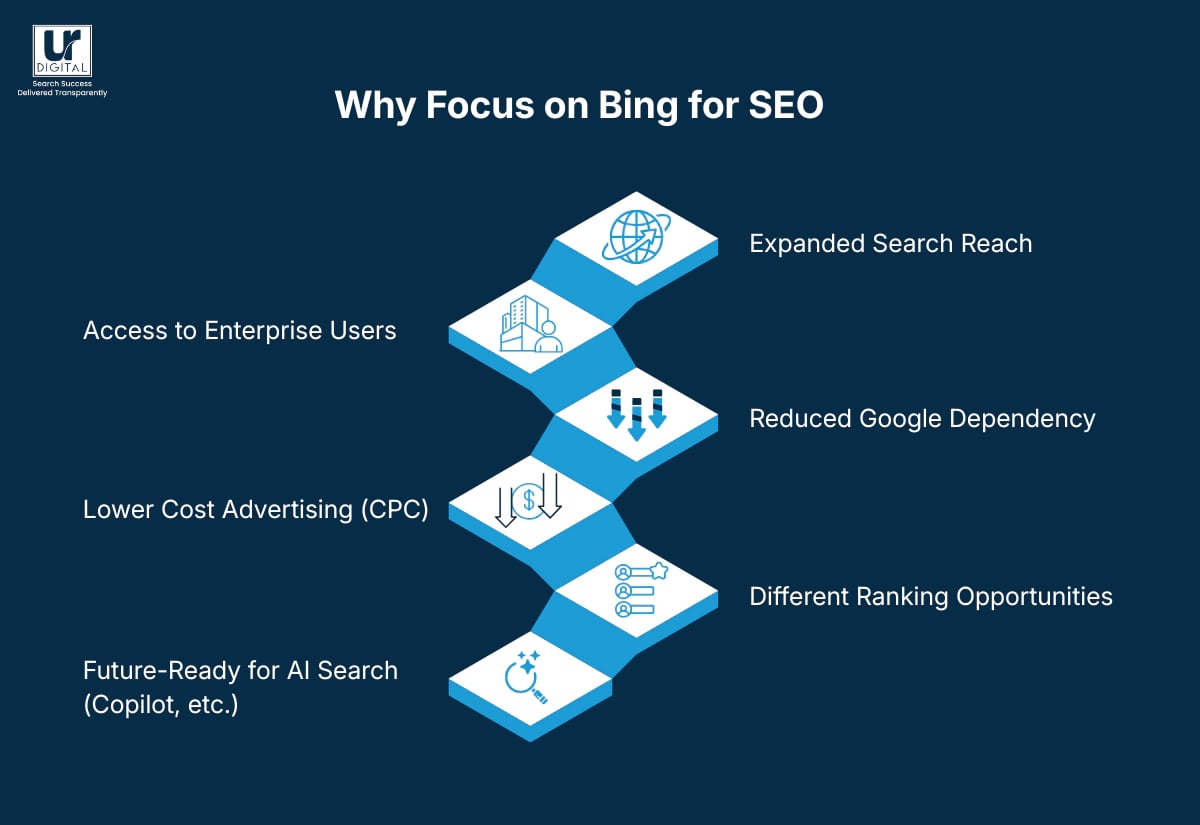
By diversifying optimisation across Bing organisation reduce single-channel dependency and stabilise traffic distribution.
Failure to diversify can result in exposure to platform-specific fluctuations. Multi-engine optimisation provides operational continuity when one engine experiences volatility.
Relying on a single search engine introduces unnecessary risk.
Integration With AI and Future Search Ecosystems
Bing’s integration with Microsoft Copilot and generative search systems means that Bing index optimisation influences emerging AI-driven answer surfaces.
On the other hand, Google’s AI-integrated Search Generative Experience (SGE) operates independently.
Organisations that optimise for both systems increase the likelihood of being included in AI-generated responses across both ecosystems.
As generative search expands, multi-engine readiness becomes a core requirement rather than an optional extension.
All this is fine, but what about Yahoo?
Don’t worry about Yahoo. Yahoo’s search results are powered by Bing.
Conclusion
Focusing only on Google is no longer enough for a well-rounded search strategy. Bing continues to drive meaningful traffic through default device settings, enterprise environments, and shared ecosystems. Ignoring them limits your reach and increases reliance on a single platform.
By accounting for differences in algorithms, technical requirements, and user behaviour, businesses can achieve more consistent visibility across search engines. The effort required to optimise for Bing is relatively small, but the upside—expanded reach, reduced risk, and access to new audience segments—is significant.
As search continues to evolve, especially with the rise of AI-driven experiences, a multi-engine approach is not just a competitive advantage—it’s becoming a necessity.
Frequently Asked Questions
Is Google’s algorithm more advanced than Bing’s?
Google applies more extensive semantic processing through systems such as BERT and MUM, whereas Bing uses alternative natural language models with different weighting.
Neither system is inherently superior; they are structurally different. Organisations must align content to both linguistic interpretations to ensure stable multi-engine ranking outcomes and dependable visibility.
Do search engines use the same ranking signals?
Search engines share core factors such as relevance, authority, and technical compliance. However, Bing places higher weighting on explicit keyword usage and domain age, while Google prioritises intent modelling and mobile experience.
Optimising for both systems ensures coverage across all ranking signals and prevents platform-specific underperformance or ranking variance.
Is traffic from Bing significant enough to justify optimisation?
Yes. Bing receives substantial traffic through Windows device defaults, Microsoft Ecosystem, Microsoft Edge, and enterprise IT environments. These structural sources create consistent search volume independent of user choice.
Organisations optimising only for Google risk excluding entire device ecosystems, reducing visibility among corporate users and lowering total available search acquisition volume.
Do technical SEO requirements differ across Google and Bing?
Technical requirements differ in crawl behaviour, Webmaster Tools features, and indexing APIs. Google emphasises Core Web Vitals and mobile responsiveness, while Bing prioritises index clarity and direct crawl management controls.
Addressing both systems prevents diagnostic gaps and ensures comprehensive multi-engine technical integrity across all content and site structures.
Is Bing still relevant in 2026?
Yes. Bing ranks as the10th most visited site on Wikipedia (as of March 2026). Its traffic is reinforced by Windows, Microsoft Edge, and corporate environments that default to Bing. Its scale makes it a necessary component of a comprehensive multi-engine optimisation strategy.
Do Google and Bing emphasise the same ranking factors?
They share core principles of relevance, authority, and technical compliance, but weighting differs. Google prioritises semantic intent, mobile experience, and advanced language modelling. Bing emphasises explicit keyword usage, domain age, and social signals. Aligning with both prevents inconsistent ranking performance across platforms.
Does multi-engine optimisation increase workload significantly?
The workload increases modestly. Bing Webmaster Tools and Google Search Console require separate configuration, but most on-page and structural improvements apply to both engines.
The benefit is reduced concentration risk, expanded reach, and more consistent traffic performance across independent search ecosystems.