User-generated content (UGC) is content created by customers—such as reviews, photos, or social posts—about a brand, service or product. It helps businesses build trust, increase engagement, and strengthen marketing efforts. By showcasing authentic customer experiences, brands can create credible, cost-effective content that supports SEO, social media, and Digital PR strategies.
[text_lm]
Introduction
User-generated content (UGC) is changing how brands connect with audiences. It’s authentic, relatable, and cost-effective, making it one of the fastest-growing forms of digital marketing.
In this guide, we’ll explore what does UGC means, benefits, and the best ways to use UGC content. Let’s start by understanding what UGC stands for and what it involves.
[image_lm]
What Is UGC?
UGC or User-Generated Content is any content created by your customers, clients, or audience.
Some examples of UGC content are:
- Blog posts
- Product reviews
- Social media posts
- Photos
- Unboxing videos
- Testimonials
- Case studies
- Q&A forum discussions
For example, upon searching the query ‘which solar panels are best for Adelaide’ on Google, we can find UGC here under Discussions and forums:

Unlike brand-produced marketing materials, UGC feels more authentic because it comes directly from real users who have experienced your service or product.
After understanding what UGC means, let’s understand how to find user-generated content.
[image_lm]
How to Find UGC
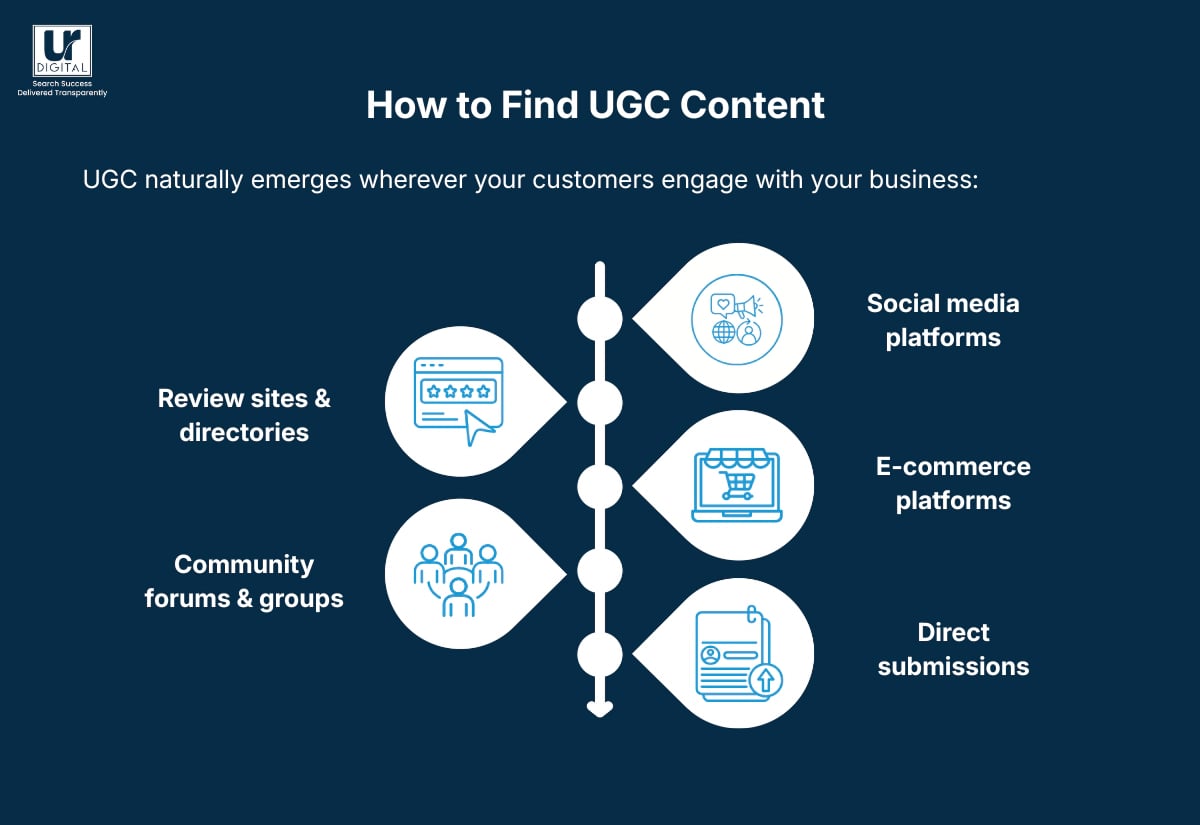
UGC naturally emerges wherever your customers engage with your business:
- Social media platforms: Instagram posts, TikTok videos, Facebook comments, and Pinterest shares featuring your products or services.
- Review sites & directories: Google reviews, Houzz, Yelp, and niche industry platforms.
- E-commerce platforms: Ratings, feedback, and photo uploads on sites like Amazon, eBay, or your own store.
- Community forums & groups: Discussions on Reddit, Facebook Groups, or specialised communities.
- Direct submissions: Testimonials, surveys, or contests that invite customers to share stories, photos, or videos.
Brands can also encourage UGC by running hashtag campaigns, offering incentives for reviews, or creating shareable experiences worth posting about.
How to Use UGC
UGC can be repurposed across your entire marketing strategy:
- On your website: Display reviews, testimonials, or social media feeds on landing pages to boost credibility.
- In ads: Real customer stories and visuals increase click-through rates and trust compared to stock or brand-only ads.
- On social media: Sharing user content shows community engagement and keeps feeds authentic.
- In email campaigns: Highlight customer success stories, featured posts, or top reviews.
- For SEO & content marketing: Featuring UGC in blogs or FAQs adds freshness and keyword diversity while showing real-world relevance. If you wish to learn more on this we suggest you watch the past SEO Webinars done on 5th August 2025 and 2nd September 2025.
Benefits of UGC for Businesses
UGC is powerful because it feels real, builds trust, and can scale easily. Its advantages are:
- Authenticity: People believe other customers more than polished brand ads.
- Social Proof: Seeing real experiences makes new customers feel confident.
- Cost-Effective: It reduces the need to constantly create branded content.
- Engagement: Involving customers in your story builds loyalty and community.
- SEO Boost: Fresh reviews and content help your brand show up in search results.
Real World Example of Using UGC
Case study: GoPro: “Photo/Video of the Day”
GoPro has built its entire brand around showcasing what users can create with its cameras. One of its most successful initiatives is the “Photo/Video of the Day” campaign, where customers submit their most creative or extreme footage.
How GoPro Encourages UGC
GoPro regularly invites users to share their best photos and videos captured with its cameras. Selected entries are featured across GoPro’s social channels and website, giving creators global exposure. In some cases, contributors can also receive cash rewards or prizes.
Real-World Impact
These user submissions act as powerful product demonstrations. Instead of traditional advertising, potential buyers see real people using the camera in real environments, from mountain biking to underwater diving. This naturally builds excitement and influences purchasing decisions.
Community Effect
Over time, GoPro has effectively turned its customers into a global network of content creators. Their audience continuously generates new material that keeps the brand visible and relevant, reducing reliance on studio-produced marketing content.
[image_lm]
Points to Remember while Using UGC
- Never reuse a customer’s post without asking permission or having clear terms.
- Tag or mention creators; it shows respect and builds trust.
- Review submissions to avoid anything offensive or off-brand.
- Make sure content doesn’t include misleading or illegal claims.
- Focus on clarity and ensure audio and visuals are clear.
- Gather reviews, photos, videos, and stories to keep content fresh.
Conclusion
Now that you know what user generated content (UGC) is, it’s time to put it into action.
Start by encouraging customers to share their experiences, choose the right platforms to showcase content, and set up a simple process for permissions. With a clear strategy, UGC can quickly become a powerful part of your marketing strategies.
Once your UGC content is ready, you can use the same for digital PR.
At UR Digital, we help brands turn authentic customer stories into impactful SEO and Digital PR campaigns that build trust and visibility.
Get in touch with us today and contact us to see how UGC may be advantageous for your brand.
FAQs
What equipment is needed for UGC?
Most UGC can be created with just a smartphone, since modern phones have strong cameras and editing features. To improve quality, creators often add a ring light, tripod, or external microphone. Professional creators may use DSLR cameras, lighting kits, or gimbals, but these aren’t essential.
What are the best UGC platforms?
Popular UGC platforms include Flowbox, Yotpo, Bazaarvoice, Pixlee, Taggbox, and Social Native, which help brands collect, manage, and license content. In Australia, platforms like Influee and agencies such as Sticki and The Curators connect local creators with brands.
What are the risks of UGC?
Key risks include copyright issues, as brands must secure permission before reusing content, and brand safety problems if inappropriate material is shared. Poor quality content, misleading claims, and privacy concerns can also create legal or reputational issues.
How much does UGC cost?
UGC is usually cheaper than professionally produced content, but costs vary. In Australia, creator-made UGC videos can start around A$50 each, while higher-quality or agency-managed campaigns cost hundreds more.
How to collect UGC content?
Brands can collect UGC through hashtags, contests, or by encouraging customers to tag them in posts. Dedicated upload portals, review requests, and post-purchase emails are also effective.
How to get customers to create UGC?
Offer incentives such as discounts, giveaways, or social recognition to motivate customers. Showcasing existing UGC inspires others to contribute, while clear instructions and simple upload options reduce friction. Timing requests right after a positive purchase experience also increases participation.
How many followers do you need for UGC?
There’s no set follower requirement for UGC — brands care more about content quality and authenticity than audience size. Even customers with small or no followings can produce valuable content.
Do you need social media for UGC?
Not always. While social media makes UGC easier to discover and share, UGC can also be collected via email, websites, or offline events.
What is the most successful UGC?
The most impactful UGC is authentic and relatable, such as video testimonials, product demos, and unboxing clips. Before-and-after transformations and lifestyle content often perform best because they show real-world results.
Can you do UGC on Instagram?
Yes, Instagram is one of the top UGC platforms where users share photos, Reels, and Stories. Brands can run hashtag campaigns, repost tagged content, or use creator-made UGC in ads. Its built-in tagging and shopping tools make it ideal for showcasing customer content.
Is UGC big in Australia?
Yes, UGC is growing quickly in Australia as brands seek more authentic ways to connect with audiences. Local agencies and platforms link Australian creators with businesses, and many campaigns now include UGC alongside influencer marketing.
[image_lm]
Disclaimer
The contents of this blog are for informational and educational purposes only. They do not constitute professional SEO, GEO, AEO, ASO, or digital PR advice and should not be relied upon as such. We recommend consulting with an SEO expert before implementing any strategies. UR Digital accepts no responsibility or liability for any outcomes resulting from actions taken in reliance on the information contained in this content. Links to third-party websites are provided for reference purposes only. We do not endorse or guarantee the accuracy, relevance, or completeness of their content.