A content funnel is a structured content strategy that guides potential customers from discovering a problem to choosing your solution. It uses three stages—awareness (ToFu), consideration (MoFu), and decision (BoFu) – to educate, build trust, and drive action. By aligning content with each stage, businesses turn audience interest into qualified leads and conversions.
[text_lm]
This guide is written by humans, for humans.
Introduction
Let’s be honest — people’s attention span is dropping by the day. Keeping them hooked to your content is a key factor in getting higher leads and conversions.
This is where a content funnel helps.
If you’re unsure about how to create engaging content for your business, a content funnel can give you direction and take the guesswork out of what to post and when.
This guide explains how to create an effective funnel that turns interest into results. Let’s start by understanding what a content funnel means.
[text_lm]
What Is a Content Funnel?
A content funnel is a simple way to plan how your content moves across various stages of a customer’s journey — right from first hearing about your brand to becoming customers.
It breaks that journey into stages — awareness, consideration, and decision.
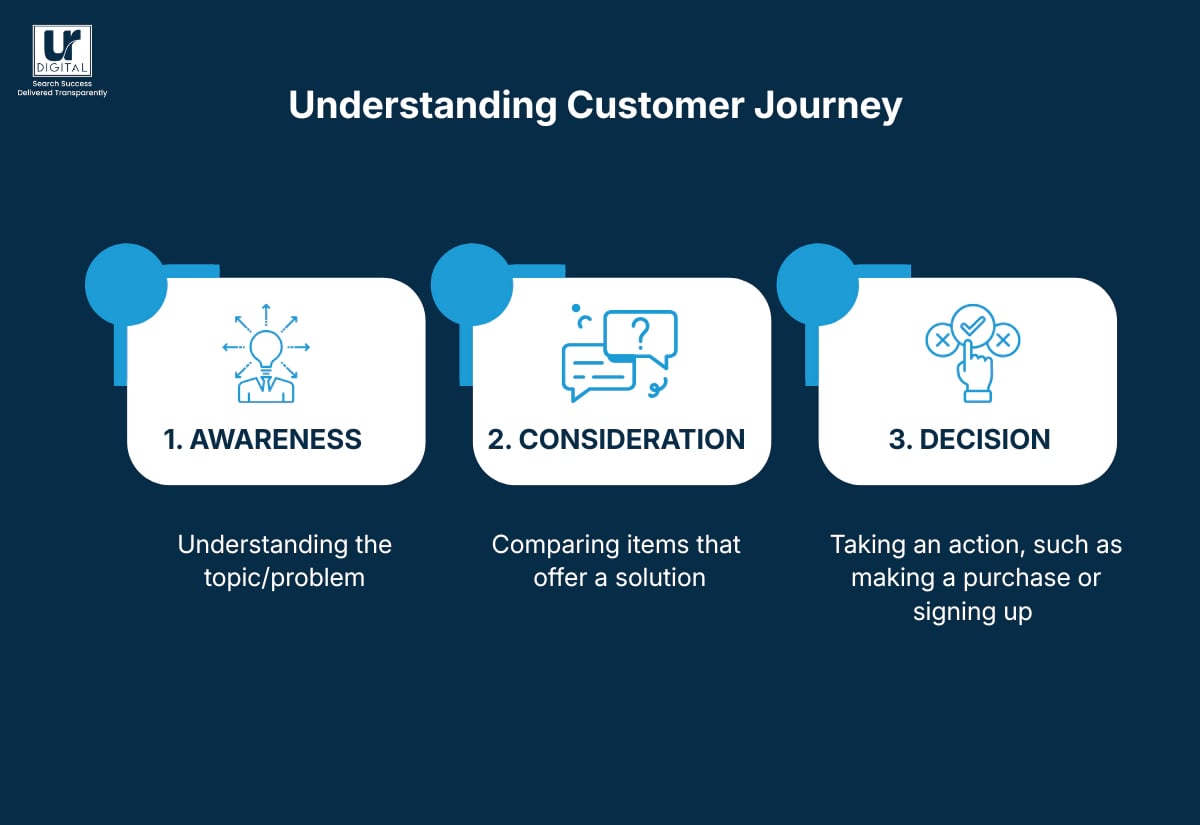
First, your content helps people understand a problem or topic (awareness). Then, it helps them compare options or show why your solution matters (consideration). Finally, it gives them what they need to take action – like booking a call, signing up, or buying (decision).
In short, a content funnel keeps your content focused and purposeful. Every piece you create helps someone take the next step closer to becoming a customer.
Now let’s understand these three stages in detail.
[text_lm]
Three Stages of a Content Funnel
There are three content funnel stages — Top of Funnel (TOFU), Middle of Funnel (MOFU), and Bottom of Funnel (BOFU).
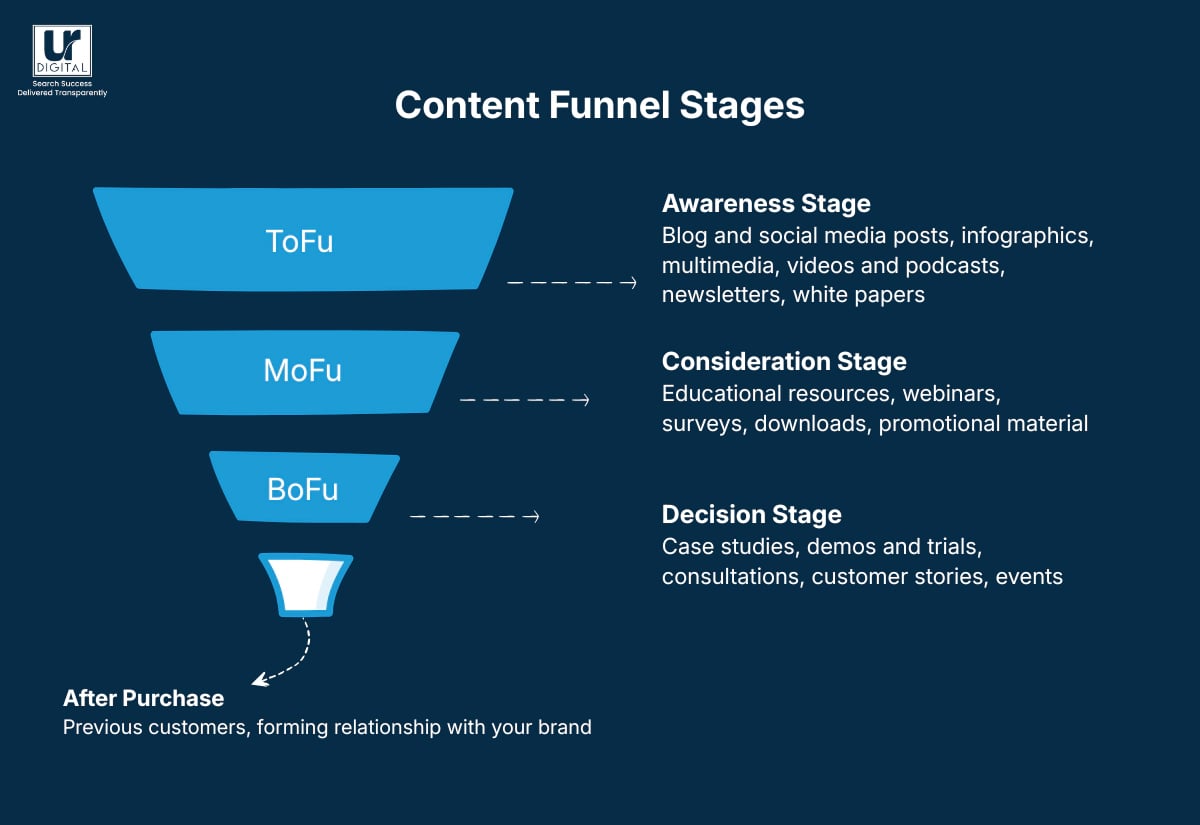
Each stage helps your audience move one step closer to becoming a customer.
1. Top of Funnel (ToFu) – Awareness
This is where people first discover you. They’re not ready to buy yet — they’re just learning or looking for answers.
- Goal: Educate and attract the user.
- Best content types: Blogs, social posts, videos, and guides that explain problems or share useful tips.
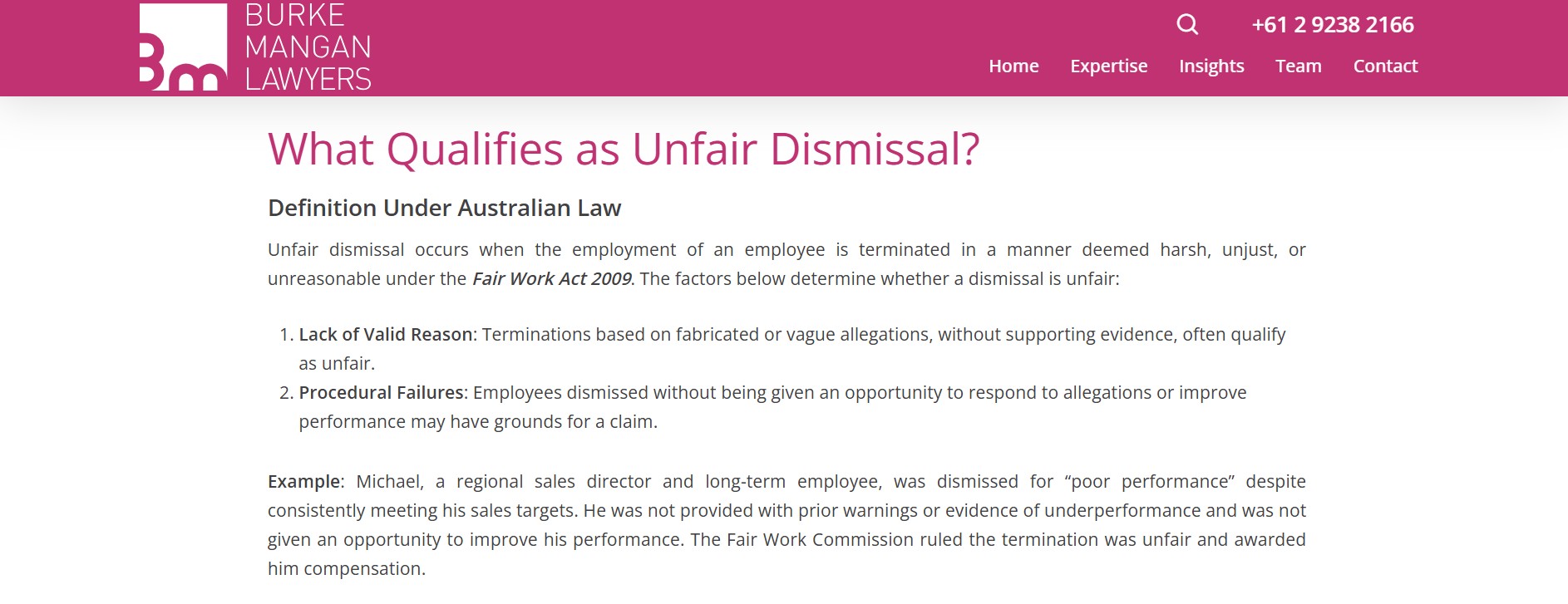
Here is an example of ToFu content (blog):
2. Middle of Funnel (MoFu) – Consideration
Here, people already know the basics and are exploring solutions. They want to understand what makes you different.
- Goal: Build trust and show expertise.
- Best content types: Case studies, webinars, comparison guides, and newsletters.
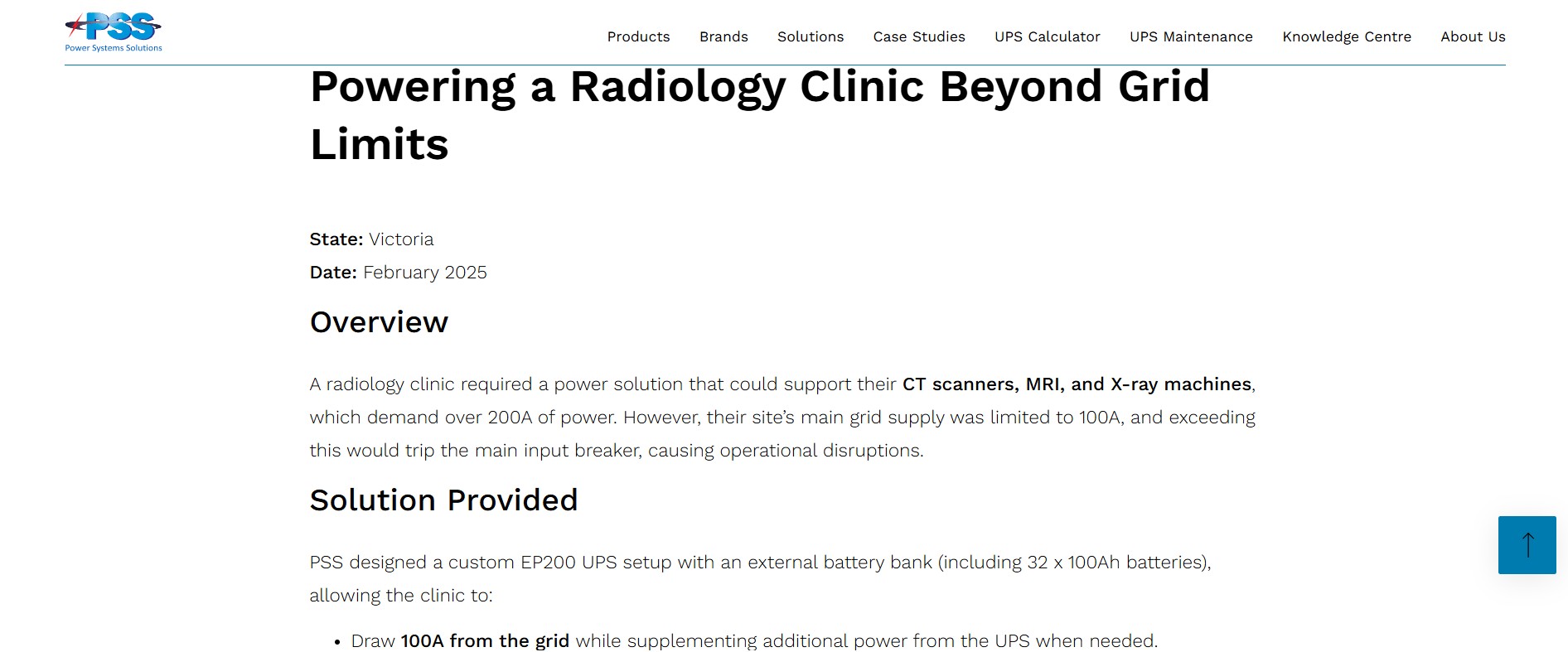
Here is an example of MoFu content (case study):
3. Bottom of Funnel (BoFu) – Decision
At this stage, your audience is ready to act. They just need that final push to choose you.
- Goal: Convert interest into action.
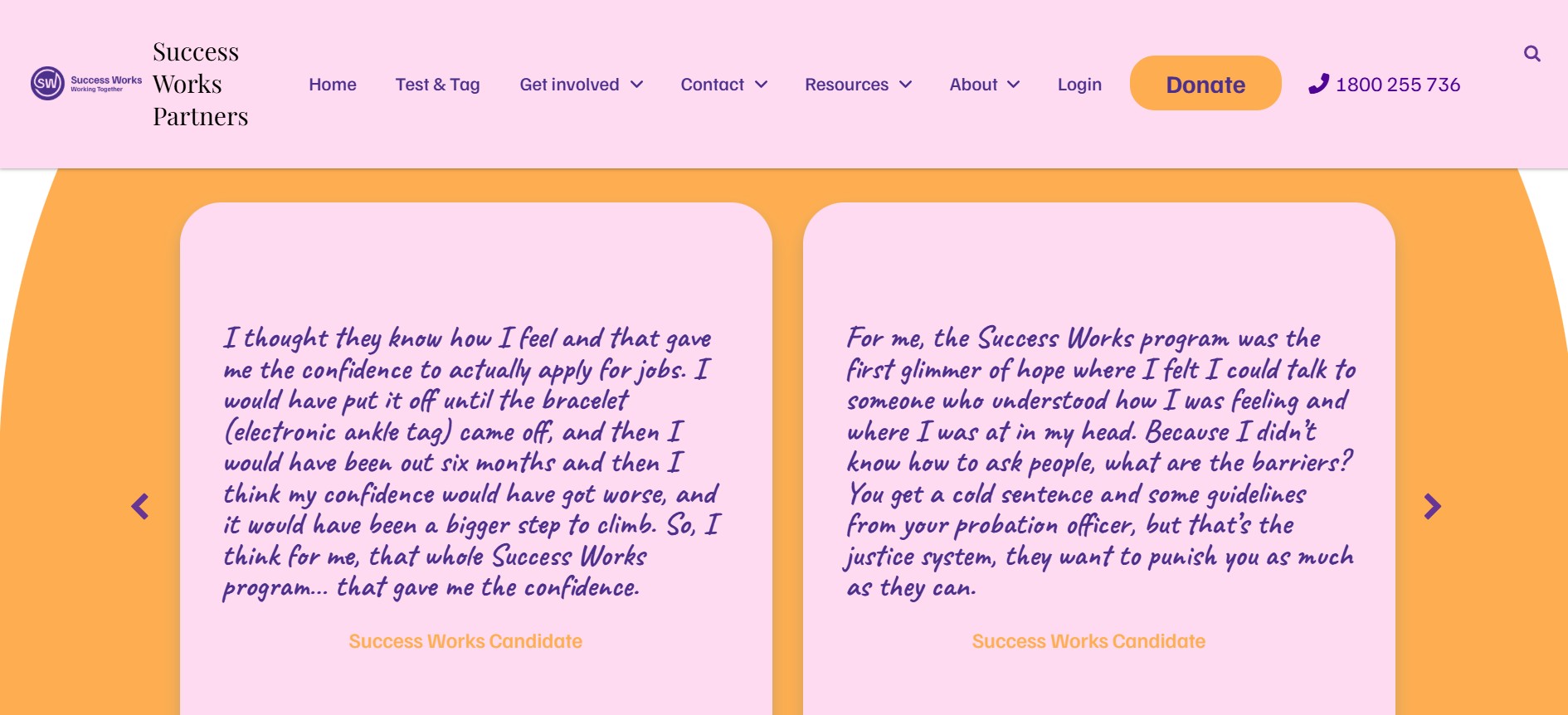
- Best content types: Product demos, pricing pages, testimonials, and free trials.
Here is an example of BoFu content (testimonials):
[text_lm]
How to Create a Content Funnel for Your Business
To create content by funnel stage, follow the 6 steps given below:
1. Define your audience
Identify your Ideal Customer Profile (ICP) — who they are, what they do, what problems they’re facing, and where they look for answers. List down important details of potential buyers such as:
- Age group
- Job title/role/industry
- Key challenges and goals
- What kind of content they trust (blogs, videos, guides, etc.)
This helps you create content that feels useful, not random.
2. Map the customer journey
Once you know your audience, outline the three stages of their journey — Awareness (ToFu), Consideration (MoFu), and Decision (BoFu).
- ToFu: for people who are facing a problem. Focus on educational content like blogs, how-to guides, and explainer videos.
- MoFu: for those exploring solutions. Share case studies, checklists, and webinars to build trust.
- BoFu: for those who are ready to act. Offer product demos, pricing pages, or testimonials to help them decide.
Mapping this journey ensures every piece of content has a clear purpose.
3. Audit your existing content
Before creating anything new, look at what you already have.
- List all your blogs, videos, and downloads in a spreadsheet.
- Label each one as ToFu, MoFu, or BoFu.
- Identify gaps where you need more targeted content.
This step helps you use your existing assets wisely for content funnel marketing.
4. Plan new content for each stage
Now that you know what’s missing, plan fresh content to fill the gaps. Focus on quality over quantity – one strong, purposeful piece per stage is better than five random posts.
- Create a simple content calendar.
- Assign each idea a funnel stage and a clear goal (traffic, leads, or conversions).
- Repurpose your best-performing content into new formats like short videos or social media snippets.
Now let’s see the most important and crucial step to create a content strategy funnel.
5. Add clear Calls to Action (CTAs)
Every piece of content should naturally guide your audience to the next step. For example:
- ToFu blogs can link to guides or newsletters.
- MoFu content can lead to demos or comparisons.
- BoFu content should direct users to pricing or contact pages.
CTAs don’t have to be pushy — they just need to help people continue their journey.
6. Measure and optimise
Finally, track how your funnel performs so you can keep improving it. Look at metrics like:
- Traffic and engagement (for ToFu)
- Form fills or downloads (for MoFu)
- Leads or purchases (for BoFu)
Refine what’s working and update what’s not. A good funnel isn’t static — it evolves as your audience and goals change.
[text_lm]
Common Mistakes to Avoid
The following are five mistakes to avoid while creating a content marketing funnel:
1. Skipping a stage
Some businesses only create awareness content or only focus on selling. A strong funnel needs all three stages — awareness, consideration, and decision — working together.
2. Selling too early
If you push a product before building trust, people may lose interest. Early-stage content should educate, not pitch. Save the selling for when your audience is ready.
3. Ignoring data
Without tracking what’s working, you’re guessing. Use analytics to see which content brings people in and which moves them forward.
4. Talking about yourself too much
Your audience cares more about solving their problem than hearing about your business. Focus on their needs first and show how you can help later.
5. Forgetting the next step
Each piece of content should lead somewhere — another article, a download, or a contact form. A clear next step keeps people moving through your funnel.
Examples of Content Funnel
When UR Digital partnered with Burke Mangan Lawyers, the goal was simple — to build trust and attract clients looking for help with family and employment law.
We first took the time to understand the firm’s audience: people facing separation, custody issues, or workplace conflicts who need clear, reliable legal information before making big decisions.
Using keyword research, we identified the main content pillars:
- Family law: Divorce and Separation, Child Support, Child Living Arrangements
- Employment law: Unfair Dismissal, Workplace Harassment, Discrimination, Sexual Harassment
These became ToFu (Top of Funnel) pillar blogs answering common questions and linking to MoFu (Middle of Funnel) articles that offered practical, in-depth guidance.
Finally, readers were directed to BoFu (Bottom of Funnel) pages — detailed service descriptions and contact forms — once they were ready to take action.
Since legal decisions often take time, our content funnel strategy focused on long-term trust with factual, empathetic content.
The result was a steady flow of qualified visitors and more enquiries built on genuine value, not hard selling.
Conclusion
Knowing how a content funnel works is just the start — building one is what makes the difference. This requires a lot of planning, data, and consistency.
UR Digital’s experienced team can help you build and refine a content funnel that attracts the right audience for your brand. Schedule a free consultation with us to start building a content funnel that achieves real results.
[text_lm]
FAQs
What is a content funnel example?
A content funnel example could be a business blog that guides readers from awareness to purchase. For instance:
- A blog post answers a common question (“How to choose a CRM”).
- It links to a detailed guide comparing tools.
- The guide leads to a demo sign-up page.
That’s a complete content funnel including all stages: awareness, consideration, and decision.
How to make a content funnel in Excel?
You can make a simple content funnel in Excel by using a funnel chart (available in newer versions):
- Add your stages (e.g. Awareness, Consideration, Decision) in one column.
- Add your numbers (e.g. leads, sign-ups, sales) in the next column.
- Select the data, then choose the “Insert” option and click on “Funnel Chart”.
Excel will create a funnel shape showing the data for each stage.
What is a content funnel format?
A content funnel format shows how a large audience narrows down to a smaller group of leads or customers. There are usually three digital marketing funnel stages:
- Top (ToFu) for awareness
- Middle (MoFu) for consideration
- Bottom (BoFu) for decision.
Each layer of the funnel represents how people move closer to taking action.
How to build a content funnel?
It depends on your goal and budget.
- For marketing funnels: ClickFunnels, Systeme.io, and GoHighLevel are popular.
- For website-based funnels: HubSpot, WordPress with Elementor, or Webflow work well.
- For eCommerce funnels: Shopify’s built-in sales flows for content marketing sales funnels.
How do I insert a funnel chart?
To insert a funnel chart in Excel, highlight your data, then go to Insert → Chart → Funnel. Once the chart appears, you can adjust the labels and colours to fit your style. In Google Sheets, there isn’t a built-in funnel chart option, but you can create a similar look by using a stacked bar chart, reversing the data order, and customising the colours to form a funnel shape.
How to do a content funnel in PowerPoint?
To do a content funnel in PowerPoint, perform the following steps:
- Go to “Insert”, select “SmartArt”, choose “Relationship”, click on “Funnel”.
- Choose a funnel layout.
- Add text for each stage (TOFU, MOFU, BOFU).
- Customise colours or add icons to make it clear and visual.
This is great for presentations explaining how you’ve created a B2B content marketing funnel.
Is there a free content funnel builder?
Yes. Systeme.io and HubSpot’s free CRM tools let you build simple funnels for free. You can also create manual funnels using Google Sheets, Canva, or Notion — it just takes more setup time.
How to make a simple content funnel?
To make a simple content funnel, create one piece of content for each stage — a blog for awareness, a guide for consideration, and a case study for decision. Link them together with clear calls to action so readers know what to do next. Then, track clicks or sign-ups to see how people respond to your content at each stage.
Is there a content funnel diagram in Google Slides?
Yes, you can create a funnel diagram in Google Slides by selecting Insert, then Diagram, and choosing Funnel from the options. You can adjust the number of content marketing funnel stages and change colours as required. If the funnel diagram isn’t available in your version, you can easily make one by using shapes like trapezoids or triangles to represent each stage.
Can you create a content funnel in Canva?
Absolutely. Search “funnel diagram” in Canva’s template library. You can customise colours, text, and icons to match your brand. Canva also lets you animate your digital marketing conversion funnel or export it for use in slides or social posts.
[text_lm]
Disclaimer
The contents of this blog are for informational and educational purposes only. They do not constitute professional SEO, GEO, AEO, ASO, or digital PR advice and should not be relied upon as such. We recommend consulting with an SEO expert before implementing any strategies. UR Digital accepts no responsibility or liability for any outcomes resulting from actions taken in reliance on the information contained in this content. Links to third-party websites are provided for reference purposes only. We do not endorse or guarantee the accuracy, relevance, or completeness of their content.