To keep your blog growing, you add more and more content doing your best to market everything you write. It’s a long and challenging process and it’s well worth going through.
But while doing that, you may be missing a low-hanging fruit, something that may boost your blog traffic considerably over time, that is go back and optimize your old content.
Here are 5 tools to do that, without any help or expensive audits.
Re-optimize for easier keywords
It all starts with keywords. Often when I see good content struggling to generate some consistent traffic, I go back and re-optimize it for easier keywords. It never changes the meaning of the content: all I do is find out how others phrase questions and answers when searching for my topic.
The easiest tools to do that are Serpstat and Ahrefs. You don’t have to be an SEO to use them, nor do you need to register an account. The free open version is enough to get started.
- Content marketing → Search questions
- SEO research → Keyword research
This could also give you some great content ideas for the future.
In Ahrefs, my favorite section is Content Gap, showing keywords your competitors rank for but you do not.
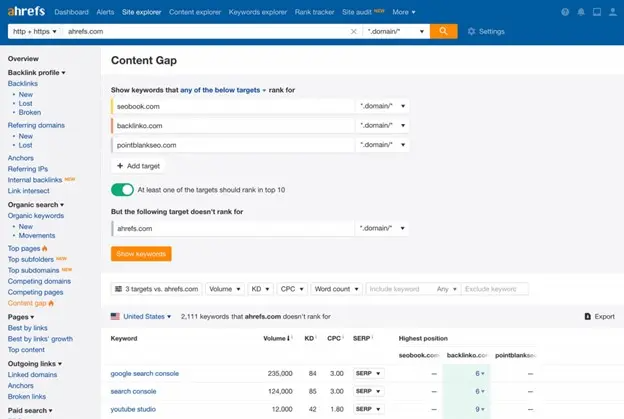
The tool has many more features including finding missing keywords, competitor comparison, and ranking monitoring.
All In One Schema.org Rich Snippets: Stand Out in Search
A rich snippet helps your content stand out in search results and can increase click-through rates even if you are not ranking in the top three. For content-based projects, Ratings, Reviews, and FAQ schema are the most valuable.

FAQ Schema adds a Q&A section directly into search snippets, making them more noticeable and clickable.
All In One Schema.org Rich Snippets is an easy-to-use WordPress plugin. When writing a tool or product review, select the “Review” schema and provide the author and rating.
Yoast also supports many schema types.
Don’t forget to use the Schema Markup Validator to ensure Google can read your code.
Find SEO and Usability Errors
SEO crawlers like Netpeak Spider and Screaming Frog help identify issues that prevent pages from ranking higher.
- Find broken links
- Identify missing internal links
- Detect broken or oversized images
- Locate thin-content pages
- And more
Useful alternatives include Broken Links Checker and the Check My Links Chrome extension.
Make Sure You Rank in Mobile Search
Mobile usage surpassed desktop usage years ago, making mobile optimization critical for visibility and usability.
If your blog is not mobile-friendly, users won’t find it or be able to use it effectively.
Use Google’s Mobile-Friendly Test tool to check how your site renders on mobile devices.
Find Which Keywords Send You Clicks
Google Search Console is essential for understanding search performance.
- Identify keywords driving traffic
- Detect critical site issues
- Monitor overall site health
- Understand how Google views your site
Search Console is also a great way to identify your strongest pages for re-optimization.
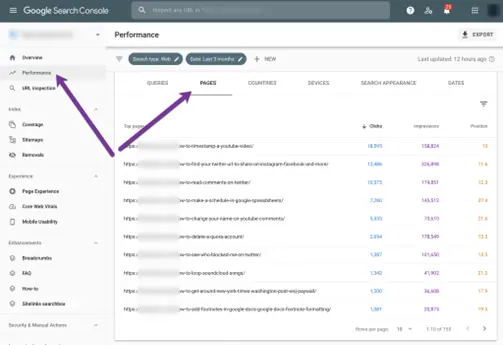
Old content provides a huge opportunity to improve organic visibility. Re-optimizing existing content should be a regular task.
If time is an issue, consider hiring a high-quality SEO service.
Are there any other SEO tools you use for your blog? Let’s discuss on Twitter @urdigitalau or @pulkitseo.
Disclaimer
The contents of this blog are for informational and educational purposes only. They do not constitute professional SEO, GEO, AEO, ASO, or digital PR advice and should not be relied upon as such. We recommend consulting with an SEO expert before implementing any strategies. UR Digital accepts no responsibility or liability for any outcomes resulting from actions taken in reliance on the information contained in this content. Links to third-party websites are provided for reference purposes only. We do not endorse or guarantee the accuracy, relevance, or completeness of their content.